Amazon vs Walmart Referral Fees: A Category-by-Category Comparison
If you sell on both Amazon and Walmart, you might assume their marketplace commissions are roughly the same. For many categories they are, but there are real differences in a few categories, in minimum fees and in fixed costs. This guide compares the two official fee schedules side by side so you can price each channel correctly.
The basics on each platform
| Item | Amazon | Walmart Marketplace |
|---|---|---|
| Fixed selling fee | Professional plan $39.99/month, or Individual plan $0.99 per item sold | No setup or monthly fees |
| Referral fee basis | Total price, including shipping and gift-wrap charges | Total sales price, including shipping, handling, gift wrap and other charges |
| Minimum referral fee | Higher of the percentage or a per-item minimum, $0.30 in most categories | No minimum stated on Walmart's page |
| Media closing fee | $1.80 per media item (books, DVD, music, software, video) | None listed |
Sources: Amazon selling plans and pricing and Walmart Marketplace referral fees (accessed October 15–16, 2026).
Category rates side by side
| Category | Amazon | Walmart |
|---|---|---|
| Clothing / Apparel & Accessories | 5% up to $15; 10% $15–$20; 17% above $20 | 5% ≤ $15; 10% $15–$20; 15% above $20 |
| Beauty, Health and Personal Care | 8% up to $10; 15% above $10 | 8% ≤ $10; 15% above $10 |
| Baby Products | 8% up to $10; 15% above $10 | 8% ≤ $10; 15% above $10 |
| Grocery | 8% up to $15; 15% above $15 | 8% ≤ $15; 15% above $15 |
| Consumer Electronics | 8% | 8% |
| Computers / Personal Computers | 8% | 6% |
| Electronics Accessories | 15% up to $100; 8% above | 15% up to $100; 8% above |
| Furniture | 15% up to $200; 10% above | 15% up to $200; 10% above |
| Jewelry | 20% up to $250; 5% above | 20% up to $250; 5% above |
| Watches | 16% up to $1,500; 3% above | 15% up to $1,500; 3% above |
| Home and Kitchen | 15% | 15% |
| Pet Supplies | 15% (22% for veterinary diets) | 15% |
| Toys and Games | 15% | 15% |
| Everything Else | 15% | 15% |
Category names differ slightly between the platforms, and so do the exact product types inside each category. Always check the category your specific product falls into on each site.
What the differences look like in practice
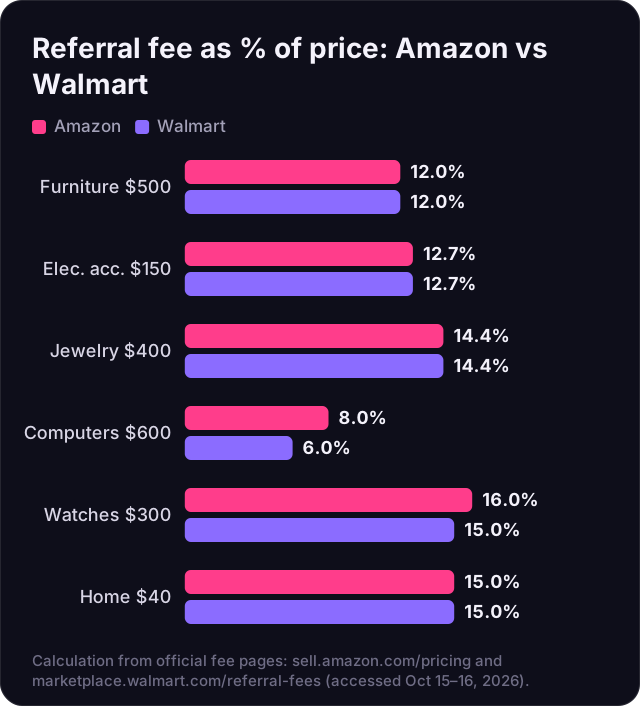
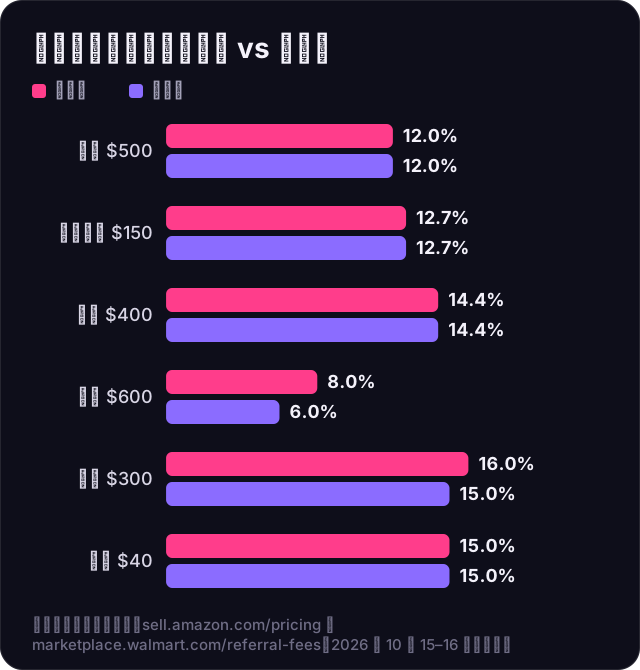
Calculation for tiered categories (both platforms apply the lower rate to the portion above the threshold): furniture at $500 = 15% × $200 + 10% × $300 = $60 (12%); electronics accessories at $150 = 15% × $100 + 8% × $50 = $19 (12.7%); jewelry at $400 = 20% × $250 + 5% × $150 = $57.50 (14.4%).
The takeaways:
- Most categories match. Home, toys, pet, beauty, grocery, furniture, jewelry and electronics accessories carry the same headline rates.
- Some categories differ. Computers (8% vs 6%), watches (16% vs 15%) and clothing above $20 (17% vs 15%) cost more on Amazon.
- Fixed costs differ. Amazon's Professional plan costs $39.99 a month; Walmart has no monthly fee. Amazon's $0.30 minimum also matters for very cheap items: on a $2 item, 15% would be $0.30 anyway, but on a $1.50 item the minimum is higher than the percentage.
Referral fees are only part of the cost. Fulfillment (FBA or WFS), storage, advertising and returns usually decide which channel is more profitable for a given SKU. For Walmart's side in detail, see our Walmart referral fees guide and WFS fees guide.
How to use this when pricing across channels
- Build one margin sheet per channel. Price, referral fee, fulfillment, ads, returns and fixed fees per unit.
- Check band thresholds in clothing, beauty, baby and grocery. A product that crosses $10, $15 or $20 may pay a higher rate on its whole price.
- Price channel by channel if fees differ. In categories like computers or clothing above $20, the same retail price leaves different margins on each site.
- Watch new-seller offers. Both platforms run incentive programs for new sellers or brands; Amazon's pricing page mentions referral-fee waivers for a new-to-Amazon brand's first year. Read the terms before counting on them.
- Re-check rates every year. Fee schedules change; confirm before peak season and before price changes.
How Atronia Innovations can help
We run Amazon and Walmart stores side by side for brands and factories, with per-channel pricing and margin tracking. Our Channel Expansion plan (5% of net revenue) is designed for adding a new marketplace. See our plans or contact us.