UPS Q3 2026: Fewer Packages, Higher Prices, and a Normal Peak Ahead

UPS is heading into the holidays shipping fewer packages but earning more on each one. On October 27, 2026, UPS reported third-quarter results that beat expectations and raised its full-year outlook, while confirming it expects a normal peak-season surge despite carrying far less Amazon volume. For sellers, the numbers explain why parcel prices keep rising.
The Q3 numbers
According to UPS's Q3 2026 earnings release (Oct 27, 2026):
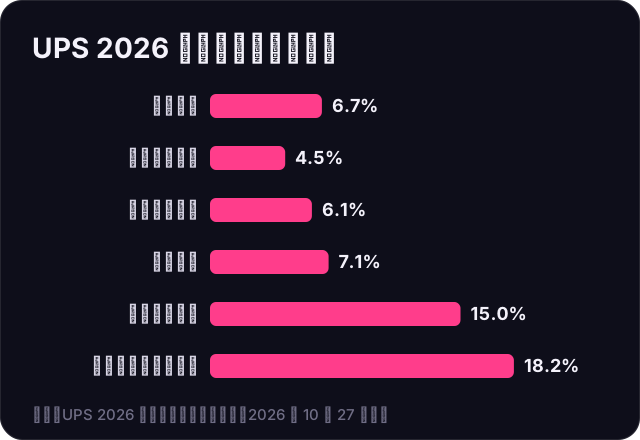
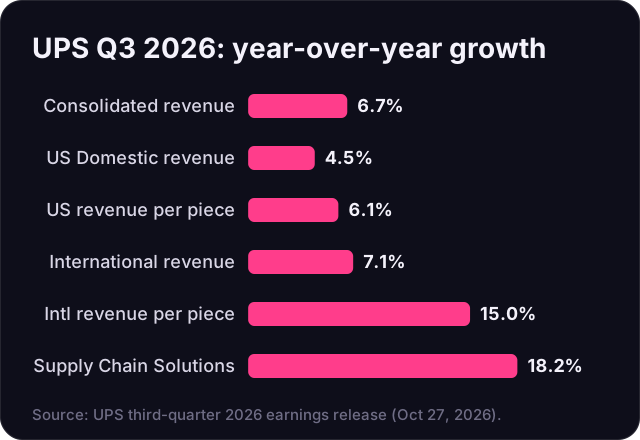
- Revenue: $22.9 billion consolidated, up 6.7% year over year.
- US Domestic: revenue of $14.9 billion, up 4.5%, driven by a 6.1% increase in revenue per piece. Average daily volume was 15.6 million pieces, down about 3.3% from 16.2 million a year earlier.
- International: revenue up 7.1%, with revenue per piece up 15.0%.
- Supply Chain Solutions: revenue up 18.2%, led by forwarding and logistics, including healthcare.
- Earnings: diluted EPS of $1.37, or $1.69 on an adjusted basis.
- Outlook raised: full-year 2026 revenue of about $92.6 billion and adjusted EPS of about $7.28. For Q4, UPS expects revenue of about $25.7 billion, per STAT Times (Oct 27, 2026).
The release does not name Amazon but says planned volume reductions from "our largest customer" were completed in the second quarter of 2026. CEO Carol Tomé said, "Given the strength we see in the business, we are raising our full-year financial guidance."
What UPS said about peak season
On the earnings call, as reported by Supply Chain Dive (Oct 27, 2026):
- This is UPS's first peak season since cutting its Amazon volume in half.
- Just over 100 US customers generate about 80% of the annual peak volume spike, Tomé said.
- Based on those customers' forecasts, UPS expects average daily volume to rise about 25% from Q3 to Q4, in line with last year's peak, though Q4 US daily volume should dip slightly year over year.
- UPS plans to hire 100,000 seasonal workers.
- Small and medium-sized businesses made up 35.1% of Q3 US volume, up about 240 basis points year over year.
- About half of the Q3 revenue-per-piece gain came from base rates and customer mix; higher fuel surcharges made up the rest.
| Indicator | Figure | Source |
|---|---|---|
| Q3 US revenue per piece | +6.1% | UPS release |
| Q3 US average daily volume | about −3.3% | UPS release (calculated); Supply Chain Dive |
| SMB share of Q3 US volume | 35.1% | Supply Chain Dive |
| Expected Q3→Q4 volume rise | about 25% | Supply Chain Dive |
| Seasonal hires | 100,000 | Supply Chain Dive |
| Q4 revenue guidance | about $25.7 billion | STAT Times |
What it means for sellers (our analysis)
UPS is chasing small and mid-size shippers. With less Amazon volume, SMB shippers are a bigger and growing share of UPS's business. That can mean better attention and sales offers for growing brands, but prices are moving up, not down.
Rate increases are working for UPS. Revenue per piece rose 6.1% while volume fell. Combined with the 5.9% general rate increase on December 21, expect UPS to keep prioritizing price over volume in 2027.
Fuel is a big part of the bill. UPS said fuel accounted for about half of its revenue-per-piece gain. With the USPS weekly fuel surcharge also starting in January, fuel will be a larger line in every carrier's cost.
Peak capacity should be fine, but plan early. A 25% rise from Q3 to Q4 is in line with last year, and UPS is hiring 100,000 seasonal workers. Still, peak surcharges apply and cutoffs are firm, so don't wait until mid-December to ship.
Checklist for the rest of peak
- Confirm your UPS peak surcharges and any account-specific caps.
- Ship holiday inventory to warehouses and FBA/WFS early.
- Compare UPS with USPS and regional carriers for light parcels before 2027 rates start.
- If you're a growing SMB shipper, ask your UPS rep about contract terms before January.
- Add a fuel line to your 2027 shipping budget for every carrier.
How Atronia Innovations can help
We offer discounted US last-mile labels (UniUni, GOFO, SwiftX, USPS) and international options with FedEx, UPS, ePost and DHL, and help sellers compare carriers before rate changes. Try our shipping tool or see our logistics services.