Wayfair Q3 2026: US Revenue Up 11.4% in a Flat Home-Goods Market

Home goods have been one of the hardest categories in US e-commerce since the pandemic boom ended. Wayfair's latest results suggest demand is finding its way back, at least to the biggest players. On November 4, 2026, Wayfair reported its fastest quarterly growth since the pandemic, with US revenue up 11.4% while the overall category stayed roughly flat. For furniture and home-goods factories selling in the US, it is a useful signal.
The Q3 numbers
According to Wayfair's Q3 2026 earnings release (Nov 4, 2026):
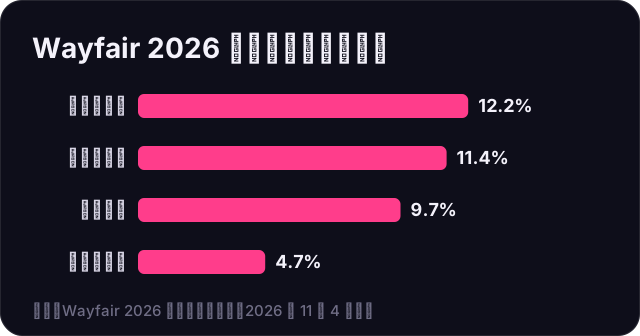
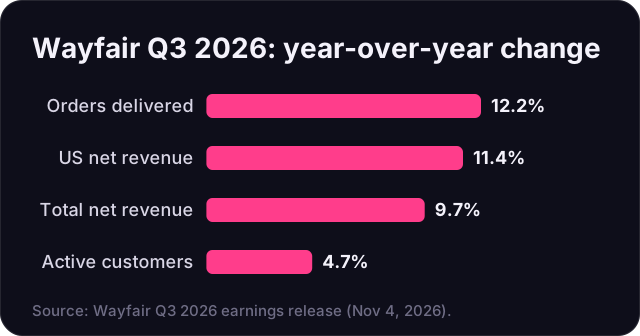
- Total net revenue was $3.42 billion, up 9.7% from $3.12 billion.
- US net revenue was $3.04 billion, up 11.4%; international fell 2.3% to $380 million.
- Orders delivered rose 12.2% to 11.0 million; active customers grew 4.7% to 22.2 million.
- Average order value slipped to $311 from $317.
- Repeat customers placed 80.0% of orders; mobile accounted for 64.4% of orders.
- Adjusted EBITDA margin was 6.9%, which Wayfair called "our best Q3 result since 2020."
CEO Niraj Shah said "Q3 was our strongest quarter of growth in the post-pandemic period," adding: "With U.S. revenue growing double digits against a roughly flat category here in Q3, we've done exactly that." Revenue came in about 1.2% above analyst estimates of roughly $3.38 billion, according to 24/7 Wall St. (Nov 4, 2026).
What drove it
Digital Commerce 360 (Nov 6, 2026), reporting on the earnings call, highlights several drivers:
- AI shopping: Wayfair works with Google, OpenAI and Meta and shares "tens of millions of products" with those platforms. Traffic referred from AI tools more than doubled from the prior quarter but is still about 1% of total traffic.
- Lower ad dependence: advertising was 9.9% of revenue, its lowest since 2021, while direct-visit revenue grew more than 15%.
- Creators and loyalty: creator-driven sales grew more than 70% compared with fall 2025's Way Day, and Wayfair Rewards ($29 a year) continues to grow.
- Physical stores: three large-format US stores are open, a fourth in Denver is scheduled for November 20, and more are planned for 2027.
| Wayfair Q3 2026 | Figure | Source |
|---|---|---|
| Total net revenue | $3.42B (+9.7%) | Wayfair release |
| US net revenue | $3.04B (+11.4%) | Wayfair release |
| Orders delivered | 11.0M (+12.2%) | Wayfair release |
| Average order value | $311 (vs $317) | Wayfair release |
| Advertising as % of revenue | 9.9% | Digital Commerce 360 |
| AI-referred traffic | ~1% of total, more than doubled QoQ | Digital Commerce 360 |
What it means for home-goods sellers (our analysis)
Demand is shifting to scale players, not growing overall. Wayfair says the category was roughly flat. Growth comes from taking share, so smaller brands need sharper value and better listings rather than expecting a rising tide.
Smaller baskets, more orders. Orders grew faster than revenue as average order value fell. Shoppers are buying, but often lower-priced pieces. Factories should make sure entry-price items are well represented.
Logistics is the battleground. Furniture is bulky and expensive to ship. Whether you sell through Wayfair, Amazon or Walmart, reliable large-parcel and freight delivery wins; see our guides on heavy and bulky shipping on Amazon and Walmart and the LTL freight class guide.
Repeat buyers matter. With 80% of orders from repeat customers, quality and reviews compound over time. A product that disappoints loses more than one sale.
AI discovery is early but real. At about 1% of traffic, AI referrals are small, but doubling quarter over quarter. Clean product data (dimensions, materials, assembly) helps across every channel.
Checklist for furniture and home-goods brands
- Review your price ladder: include strong entry-price options.
- Complete dimensions, materials, weight capacity and assembly details on every listing.
- Check delivery promises and damage rates for bulky items.
- Compare channel performance across Wayfair, Amazon and Walmart quarterly.
- Prepare holiday inventory for large items early, given longer freight lead times.
How Atronia Innovations can help
We help Chinese furniture and home-goods factories build US channels, from marketplace listings and ads to bulky-item logistics. Talk to our team about your channel plan.