USPS Ground Advantage for Sellers: Rules, DIM Weight and Savings
For lightweight e-commerce orders shipped within the US, USPS Ground Advantage is often the default service: tracking and insurance are included, and it reaches every US address. But a few rules, especially ounce tiers and dimensional weight, decide whether a parcel is cheap or surprisingly expensive. This guide covers the official rules, a worked example and a checklist to keep your label costs down.
The official rules at a glance
According to USPS's Ground Advantage page (accessed October 13, 2026):
| Rule | USPS Ground Advantage |
|---|---|
| Expected delivery | 2–5 days (some destinations such as Alaska, Hawaii and offshore, or HAZMAT items, may take longer) |
| Maximum weight | 70 lb |
| Maximum size | 130 inches combined length and girth |
| Weight pricing | Ounce tiers up to 15.999 oz (4, 8, 12 and 15.999 oz); above that, priced by the pound, rounded up |
| Dimensional weight | Packages over 1 cubic foot: L × W × H ÷ 139; you pay the higher of actual and dimensional weight |
| Insurance | $100 included for outbound and return shipments; up to $5,000 extra coverage available |
| Tracking | Included |
| Extra fees (examples) | Nonstandard size fees from $4.50 to $21.00 |
USPS lists retail prices starting at $8.40 at a Post Office, and notes that shipping online can give access to lower commercial prices. Most sellers buy labels at commercial rates through shipping software, marketplaces or a reseller.
Where sellers lose money: ounces and box size
Ounce tiers
Under one pound, price steps up at 4, 8, 12 and 15.999 oz. A product that weighs 8.2 oz packed is billed in the 12 oz tier. Weigh every SKU packed, with packaging and inserts, and check whether a lighter mailer or fewer inserts moves it down a tier. Across thousands of orders, one tier makes a real difference.
Dimensional weight
Once a package is over 1 cubic foot (1,728 cubic inches), USPS compares actual weight with dimensional weight (L × W × H ÷ 139) and charges the higher one. Here is how box size changes the billable weight of the same 3 lb product:
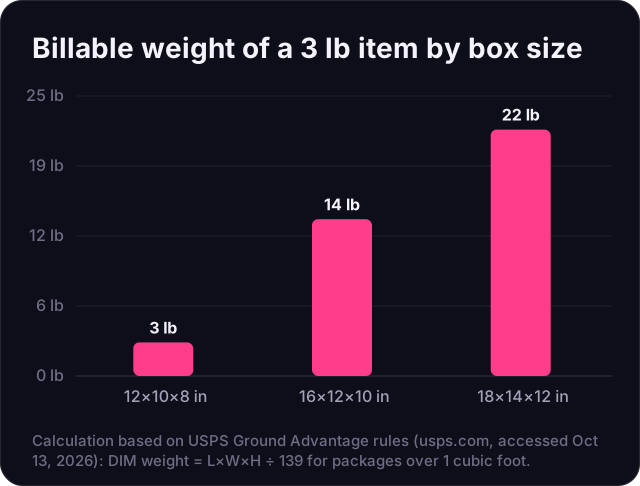
The smallest box stays under 1 cubic foot, so it is billed at the actual 3 lb. The two larger boxes are billed at 14 lb and 22 lb, many times the product's real weight. Right-sizing packaging is often the fastest saving available. For more cost levers across carriers, see our guide on cutting US shipping costs.
Temporary price changes to know about now
Two temporary changes affect Ground Advantage this season:
- Transportation-related increase. On March 25, 2026, USPS announced an 8% increase to base prices for Priority Mail Express, Priority Mail, Ground Advantage and Parcel Select, starting April 26 (pending regulator review) and running until midnight Central Time on January 17, 2027.
- Holiday prices. USPS's temporary holiday prices for the same products apply from October 4, 2026 to January 17, 2027; see our 2026 peak season surcharge article for the per-package ranges.
USPS has not yet announced what replaces these after January 17, 2027, so budget conservatively for early 2027 and watch for its next price filing.
When Ground Advantage is the right choice
- Good fit: light parcels (especially under 1 lb), compact boxes, orders where 2–5 day delivery is acceptable, and deliveries to PO boxes or remote addresses USPS reaches anyway.
- Compare alternatives: heavier or bulky parcels (where DIM weight kicks in), packages needing faster or guaranteed delivery, and high-value items needing more than the included $100 insurance.
- Regional carriers: in dense metro areas, regional last-mile carriers can be cheaper for some zones and weights. Compare rates by zone for your real order profile.
Checklist: get Ground Advantage costs under control
- Weigh every SKU packed and record the USPS tier it falls into.
- Test lighter mailers for items close to a tier break.
- Keep box volume under 1,728 cubic inches where the product allows.
- Buy labels at commercial rates, not retail counter prices.
- Declare extra insurance only on items worth more than $100.
- Recheck your rate mix after January 17, 2027, when the temporary prices end.
How Atronia Innovations can help
We provide discounted carrier labels, including USPS and US last-mile options UniUni, GOFO and SwiftX, and help you pick the cheapest service by weight and zone. Try our shipping cost tool or see our logistics services.